
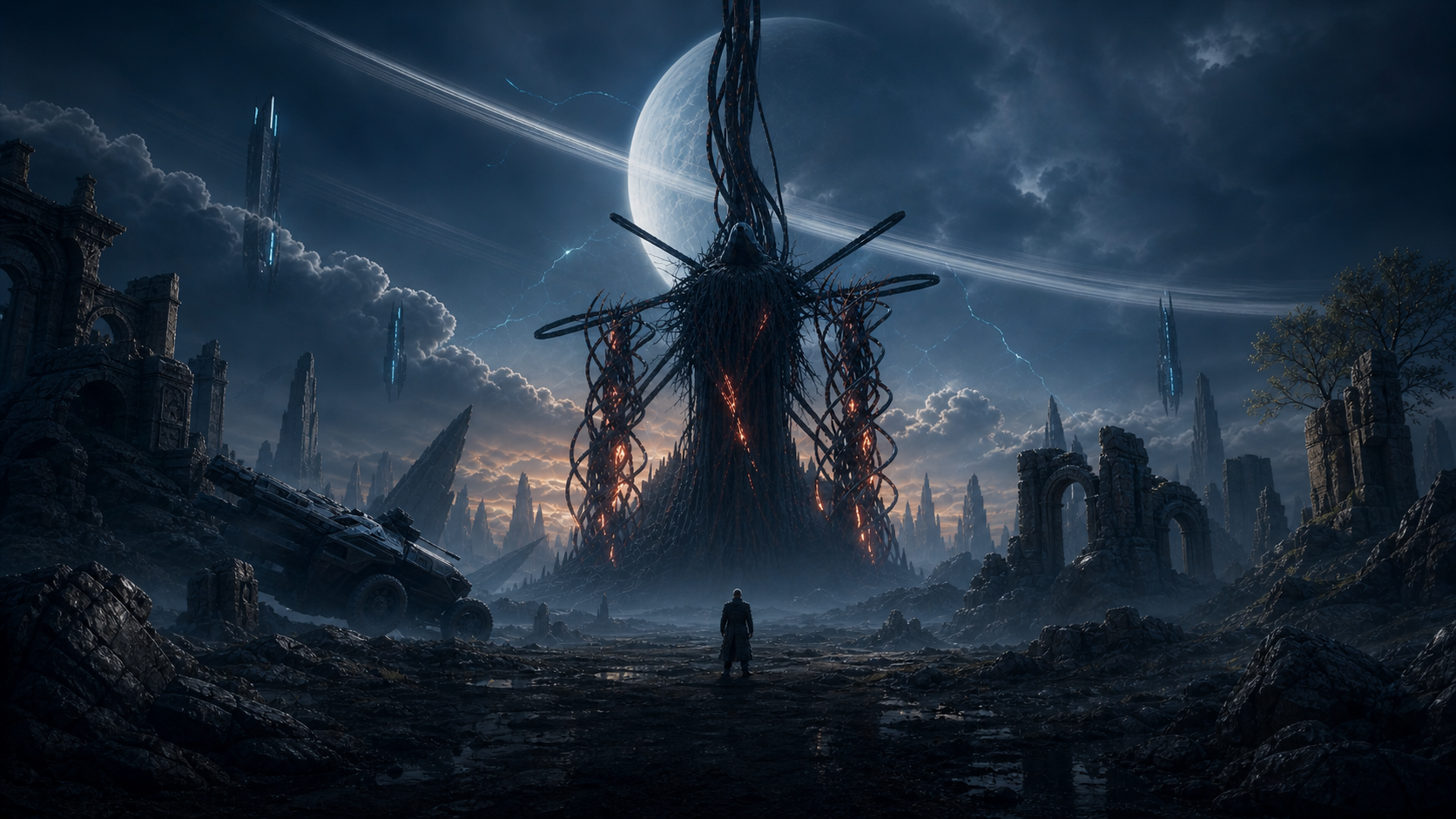
In the original Q&A, Mostafa describes the move to Unreal Engine 5 as a major technical and creative step for Eternal Spectre. The upgrade required preparation, but it gave the team access to tools that better matched the scale, atmosphere, and visual ambition of the project.
What changed with Unreal Engine 5?
Nanite gave the art team more freedom with high-detail assets while improving performance compared with the previous UE4 pipeline.
Lumen, Virtual Shadow Maps, and dynamic lighting helped push Eternal Spectre toward a more atmospheric and immersive world.
Animation improvements such as motion warping, contextual animation, skeleton sharing, and Control Rig sped up character and cinematic work.
World Partitioning and PCG helped the team manage larger environments, integrate levels more smoothly, and build terrain faster.
MetaSounds added richer, more adaptive audio for levels, scenes, and cinematic moments.
UE5's scalability helped the team target PC and console platforms while keeping older hardware in mind.
The migration had stability challenges, but engine updates and team iteration helped keep development moving.
The move also supported features such as Rifts, where players are transported to worlds with different rules and challenges.
What this means for the game
For Eternal Spectre, Unreal Engine 5 is not only a visual upgrade. It gives the team a stronger foundation for building Arias as a place with scale, atmosphere, and technical flexibility. Nanite and Lumen help the world hold more detail and more dynamic lighting, while World Partitioning, PCG, and improved animation tools make it easier to build larger spaces, scenes, characters, and interactions without slowing the entire production down.
The goal is a game that feels more responsive to the player and more expressive in motion, sound, and visual storytelling. Better tools mean the team can spend more time shaping the moments that matter: the fracture in the sky, the instability of the world, the pressure of combat, and the consequences of player choice. UE5 also supports features such as Rifts, where Eternal Spectre can move players into spaces with different rules, challenges, and moods while still feeling connected to the larger world.